



Bats · At a glance
Share the night sky.
Not your attic.
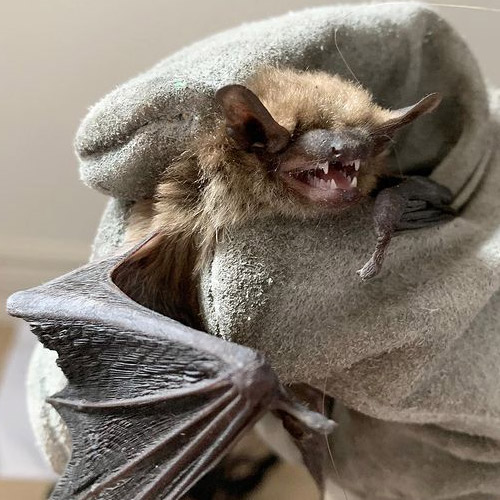
Bats may find shelter in attics through small openings along a roofline. A careful inspection helps us understand where they enter and whether young bats are present.
Our family-run team brings 40+ years of hands-on experience to humane bat removal across Toronto and the GTA.
Where they shelter
Warm, quiet attics and roof spaces can provide a protected place for a colony.
How they get in
Small gaps at rooflines, soffits, roof vents and chimneys can allow access.
Signs & damage
Bats flying near one roof opening at dusk, sounds in the attic or droppings below a roost.
Young bats first
Exclusion must wait until young bats can fly out safely with the adults.
See our procedures
Humane removal.
See it in action.
See how our team inspects a home, plans a safe exit and helps keep bats from returning.
 ▶ Watch the bat removal video
Compassion is not negotiable
Bats in your attic.
A humane way forward.
Every bat deserves to be treated with care. When a colony settles in an attic, we inspect carefully and plan an exclusion around the animals’ seasonal needs. Young bats must be able to fly before exclusion can begin, so timing matters as much as the method. Compassion guides every step.
When it is safe, our team uses carefully placed one-way exits so bats can leave. We then seal the small openings they used, helping protect your home while allowing the colony to return to the night sky.
We offer on-site assessments, humane removal and repairs to help you feel comfortable at home again.
Your bat resource
Answers, all in one place.
Explore the facts, learn what to watch for and find answers to common questions.
Bat Facts
Bats Across Canada
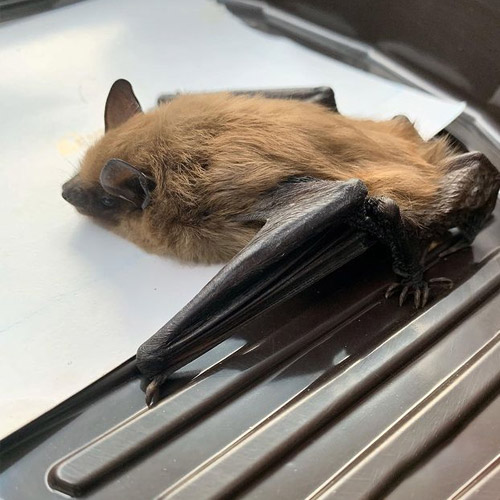
Two species of bats are found throughout Canada, the Big Brown Bat and the Little Brown Bat. They have slightly different life-cycles and characteristics and as such are handled differently by wildlife removal experts. The following are some more bat facts for Toronto homeowners:
Habitat
Urban: In urban environments bats are found in semi-open areas often near trees and water but will make their roots inside building spaces.
Breeding
Time of year: Bats mate in the fall and sometimes into the winter months. Sperm is stored and ovulation and fertilization are delayed until the female emerges from hibernation.
Litter size: Big Brown Bats have one to two offspring every year while the Little Brown Bat has only one.
Rearing: Little Brown Bats will stay in the roost for the first 18 days of their life and can fly thereafter. They reach maturity within 3 weeks. Big Brown Bats take longer to mature and do not reach adult size until 70 days.
Sexual maturity: Female bats are sexually mature near the end of their first year. Male bats take slightly longer and will reach sexual maturity after their first year.
Food And Feeding
Time of day: Bats are nocturnal and use high frequency echo-location to seek out their food.
Diet: Big Brown Bats eat a variety of insects but prefer beetles. Little Brown Bats enjoy flying insects like midges, mosquitoes and mayflies.
Morphology And Lifestyle
- Wing span: Big Brown Bats, 32 to 39cm; Little Brown Bats, 22 to 27cm.
- Weight: Big Brown Bats, 11 to 25g; Little Brown Bats, 5 to 11g.
- Vocalization: Bats use high frequency echo-location that is hard to hear with the exception of some clicking sounds.
- Lifespan: Between 10 and 20 years with the rare bat living as long as 30 years.
Did You Know?
- Bat fact: Bats play an important role in our environment as they can consume up to 3,000 insects in one night.
- Bat fact: Bats in Canada will not fly in your hair and suck your blood.
- Bat fact: Bats can spread the rabies virus when infected with very little to no evidence of contact.
- Bat fact: Bats can squeeze through a hole the size of a dime.
- Bat fact: A bat can produce several times its own weight in waste each month.
- Bat fact: Bat colonies can range in size from one to several hundred and can double in size every year.
- Bat fact: Bats hibernate when the temperature drops below 10 degrees C.
Bat Problems
Although bats provide a very important role in our environment (a single bat can eat up to 3,000 insects, including mosquitoes, in one night), they can also be dangerous if they roost in buildings or come into contact with people. It’s a myth that bats in Canada fly in your hair or suck your blood, but there are many other bat problems that Toronto and GTA homeowners can experience, leaving many wondering how to get rid of them. The following are some common bat problems and some warning signs for you to look out for:
Property Damage
Odours: Bats will roost inside walls, attics and between the roof and ceiling. They’re droppings can accumulate quickly and can cause sever odours.
Heating A/C damage: The odours from droppings and dead bats can also cause damage to heating and air conditioning systems.
Health and Safety Risks
Rabies: Bats can bite you while you are sleeping or if you attempt to catch or remove them. Recently, there has been increased incidences of bat rabies in Ontario.
Histoplasmosis: Bat feces and urine can promote the growth of a fungus that, if inhaled, can cause a sever lung disease called Histoplasmosis which is characterized by flu-like symptoms. The very young, very old and those with impaired immune systems are at greatest risk for severe illness.
These diseases are very serious and as such, bat removal and control should only be handled by trained technicians.
Bat FAQs
The Following Are Some Common Questions That Our Customers Ask Us:
I have been told that bats will leave my attic on their own after 6, 8 weeks. Is that true?
No. In fact, bats may hibernate through the winter in a tight space in your attic or within the walls or crawlspaces of your home. The only way to ensure they are permanently excluded is to use humane removal techniques and to install professional bat proofing.
I’ve been told that you have to catch the bats and relocate them far away from your house otherwise they will get back in. Is that true?
No. Following our humane removal procedure, we install professional bat proofing in all possible entry points. The bats will not be able to get back in, we guarantee it! In fact, if a bat does manage to chew back into your home, we will return and complete the process again for free.
How do I know if I have bats in my home or building?
Bats are often associated with strong smells and large accumulations of droppings. If you think you have bats in your home, you should consult a wildlife specialist because there are some serious health risks associated with bats and their feces/urine.