



Squirrels · At a glance
Share your trees.
Not your attic.
Agile and adaptable, squirrels look for secure places to nest and raise their young. Attics, chimneys and wall spaces can offer the shelter they need, right inside your home.
Our family-run team brings 40+ years of hands-on experience to humane squirrel removal across Toronto and the GTA.

Where they live
Attics, chimneys and wall spaces that offer a sheltered place to nest.
How they get in
Roof vents, existing openings, or weakened soffits, flashing, shingles and siding.
Signs & damage
Scurrying in the attic or walls, chewed vents and roof edges, and disturbed insulation.
There may be babies
One squirrel coming and going may be a mother with young tucked away in a hidden nest.
See our procedures
Humane removal.
See it in action.
Watch how our team approaches squirrel removal from attics, chimneys and sheltered spaces, with care for the animals and your home.
Compassion is not negotiable
Squirrels in attics.
A humane way forward.
Every animal deserves to be treated with care. When a squirrel finds shelter in a home, we look for the safest way to help the family move on together, especially when young may be hidden nearby. We take the time to understand where they are and what they need before choosing a humane approach. Compassion guides every step.
Our team uses one-way doors, heated reunion boxes, and cellular monitoring to help keep mothers and babies together while protecting your home. Squirrels are living beings adapting to a shared city. We respect them as we make your space safe again.
If you’re experiencing squirrel problems in your home, Gates Wildlife Control provides effective squirrel removal and wildlife control services to prevent damage and protect your property. Squirrels can cause extensive damage to roofs and structures, compromising insulation and electrical wiring. Gates experts offer free on-site inspections, humane removal services, and animal-proofing solutions, including repairs and installations of galvanized screens. With 40+ years of experience and a one-year guarantee on all repair work, trust Gates Wildlife Control to solve your wildlife problem and protect your home.
Your squirrel resource
Answers, all in one place.
Explore the facts, understand potential damage, and find answers to common questions without leaving this page.
Squirrel Facts
Facts You Should Know About Squirrels
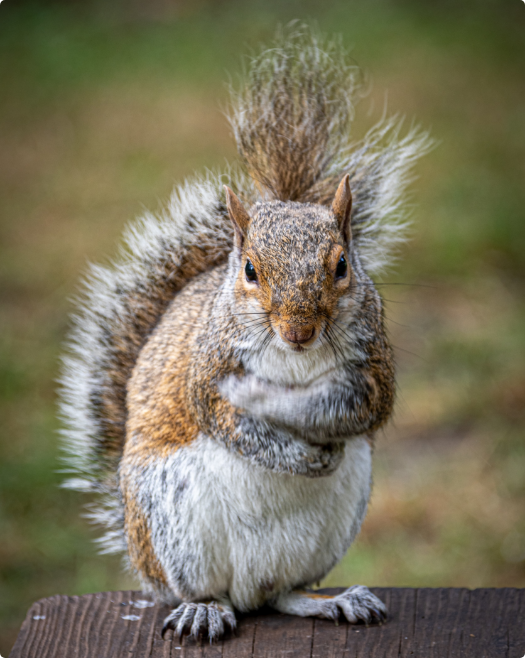
Two species of squirrel found in Ontario are the Red Squirrel and the Eastern Gray Squirrel. The grey squirrel is the most common of the two species found locally in the GTA. Eastern grey squirrels commonly occur in two colour phases, grey and black, which leads people to think(mistakenly) that there are two different species. The most notable physical feature of the eastern grey squirrel is its large bushy tail. The tail has many important functions. It acts as a rudder when the animal jumps from high places, as a warm covering during the winter, as a signal to other eastern grey squirrels indicating an individual’s mood.
Habitat
Urban: Although the grey squirrel is found in parks and woodland areas, they adapt quite easily to urban environments, taking up residence in and around buildings. They become very accustomed to utilizing attics and chimneys for nesting sites.
Breeding
When Do Squirrels Mate?
Twice per year: Female squirrels can mate only twice a year, but males can mate at any time. Often, several males will attempt to mate with the same female. They try to attract her attention by slapping the bark of trees with their paws and chattering loudly. After the mating the males play no part in the rearing of the young. Birth occurs six weeks after mating.
When Do Squirrels Have Babies?
Squirrels have two breeding periods per year, one in mid-summer and another in early spring. In the Toronto and GTA, young are usually born between March and April, with a second litter arriving around July or August.
Litter size: Female squirrels produce litters between 1 and 7 offspring (typically 5 or 6).
Rearing: The naked, blind and deaf young are fed every two to four hours for several weeks. At seven, eight weeks, they start to follow their mother around within the den site. The young squirrels gradually begin to eat solid food and are weaned at ten, eleven weeks of age. A month later, they start to leave the den. If there are not too many squirrels in the area, the young will build nests nearby. Otherwise, they will be chased away to less crowded feeding areas. Typically some of the squirrels will remain actively using the birthing den.
Sexual maturity: Squirrels are sexually mature and able to reproduce at 11 months.
Food And Feeding
Frequency: The Grey Squirrel feeds every day, even in the winter. It does not hibernate and is unable to conserve enough energy to survive for long periods without food.
Time of day: It is most active at dawn and dusk, when it searches for whatever fruits, shoots, and seeds that are in season. Small thumbs on it’s front paws allow it to hold food securely as it feeds.
Diet: The squirrel’s diet varies according to season. It eats mainly tree bark and fungi in the winter and buds in the summer. In September it eats nuts and acorns. A hungry grey squirrel will also raid a bird’s nest for eggs, steal food from bird feeders and dig up plants. In urban environments the grey squirrels also come across free handouts from people (namely peanuts in the shell). The squirrel buries extra food just below the soils surface, which it later locates by smell.
Morphology And Lifestyle
Body length: 9-12 in
Tail length: 7-10 in
Weight: 12-28 oz
Habitat: Above ground (attics and chimneys), but spends much of it’s time on the ground
Call: Chattering and piercing scream
Lifespan: 3-4 years
Did You Know?
Squirrel fact: The squirrel’s front teeth continue to grow throughout it’s life, so they must continue to gnaw to wear them down.
Squirrel fact: A male squirrel can smell a female that is ready to mate.
Squirrel fact: The grey squirrel can leap more than 20 feet.
Squirrel fact: Although usually frightened of people, a mother squirrel can be quite aggressive if she perceives danger or is separated from her babies. Squirrels are very swift and can move or attack quickly if threatened.
Squirrel fact: There can be 25 or more squirrels per square kilometre in urban areas with mature trees.
Squirrel fact: Squirrels are more adaptable than you might think. They can fit through a hole the size of a baseball (black/grey squirrels) or a golf ball (red squirrels). And smaller holes can easily be chewed open.
Squirrel Problems
A variety of squirrel problems can occur when they decide to nest within a residential or commercial structure. Some of these are easily remedied while others can have very negative impacts on the both the buildings and the people that inhabit them. The following are some common squirrel problems and some warning signs for you to look out for:
Property Damage
Squirrels cause the most amount of damage in the area immediately around their nest. Squirrels will nest in any area above ground that is safe and secure from predators and the elements. Sometimes squirrels will nest in trees. However, in urban areas, most nesting occurs in attics and chimneys.
Attics: In attics squirrels typically use building materials (insulation, vapor barrier, drywall and wood shavings) to build their nest. This means permanent damage to structural and functional components of a building. Because they are rodents, squirrels need materials to gnaw on in order to wear down their constantly growing front teeth. As such, they will continue to cause damage to the building each day they are present. Squirrels produce two litters per year with an average of 5-6 offspring per litter. Daily gnawing and fast reproductive capacity can result in significant structural damage if left unaddressed.
Chimneys: In chimneys squirrels will bring various materials (branches, leaves, moss, and newspapers) in to build their nest. For such a small animal, the volume of material they use can be surprising. Larger nests contain enough debris to fill 1-2 garbage bags. Obviously, this is a major hazard which can have serious health and safety ramifications if the nest causes smoke to back-up or if it catches on fire.
Electrical:Squirrels will chew through anything, structural wood, aluminium, electrical wires, insulation, shingles and vents are favourite targets. Most concerning is when they chew through electrical wires. Exposed electrical wires can easily cause building materials to catch on fire. Obviously, property damage is of concern but even more so is the risk to the lives of the people occupying the building.
Plumbing: The frequent use of plastic water pipes in homes has meant an increase in flooding due to squirrels chewing through pipes.
Health And Safety Risks
Fire: Although already mentioned above, the risk of fire is so tantamount that we feel it vital to mention it twice. Building materials are dry and in close contact with wiring, which means chewed wires can easily start a fire.
Ticks and fleas: Squirrels attract ticks and fleas, especially in warmer weather. If the squirrels leave the nest for an extended period, these ticks and fleas will look for new hosts (i.e. people and pets).
Feces : Urine and feces can cause contamination and odors to build up within the structure of the building.
Rabies:: Although uncommon carriers, any mammal can carry the Rabies virus. So never try to corner or pick up an adult squirrel. Although usually frightened of people, a squirrel can be quite aggressive if it perceives danger. Squirrels are very swift and can move or attack quickly if threatened.
Squirrel FAQs
Frequently Asked Squirrel Questions That Our Customers Ask Us:
I have been told that squirrels will leave my attic on their own after 6, 8 weeks. Is that true?
No. The squirrels use the attic as a secure living space that they can return to on and off throughout the day. The best way to ensure they are all out and will not be back in is to use humane removal techniques and to install professional squirrel proofing.
We only hear one squirrel going in and out of our attic so there are probably no babies, right?
Not necessarily. Squirrels that have just given birth often appear solitary. This is because the babies remain in the nest and are not heard until they are about 7-9 weeks old. It often takes years of experience for our trained technicians to identify these hidden nests and remove them using humane, hands-on techniques.
I’ve been told that you have to catch the squirrels and relocate then far away from your house otherwise they will chew back in. Is that true?
No. Following our humane squirrel removal procedure, we install professional squirrel proofing in all possible entry points. The squirrels will not be able to chew back in, we guarantee it! In fact, this method assures you that we have sealed all the potential areas. If squirrels do manage to chew back into your home, we will return and complete the procedure again free of charge.
How do I know if I have squirrels in my home or building?
Squirrels are very active and are often detected because home and business owners hear them scurrying in the attic or walls. Often they are seen sunning themselves or chewing on the roof area. Look for chewed or damaged soffit, vents and flashings as well as holes along the roof line for potential entry points. If in doubt, call us to assess your entire home for signs of animal activity.