



Pigeons · At a glance
Share the sky.
Not your balcony.
A balcony or rooftop can feel like a safe place for a pigeon to settle. We help you reclaim your space with thoughtful exclusion and respect for the birds that call our city home.
Our family-run team brings 40+ years of hands-on experience to humane wildlife removal and prevention across Toronto and the GTA.

A place to roost
Balconies, ledges and rooftops offer sheltered spots to rest and nest.
Open invitations
Sheltered ledges and accessible balcony spaces can encourage repeat visits.
Signs of a flock
Repeated roosting, nesting material and accumulating droppings deserve attention.
A better boundary
Properly fitted netting, wire or coil can help keep vulnerable areas clear.
See our humane approach
Compassion.
In action.
A look at the care behind our wildlife work. Every species and property needs its own assessment; our team will explain the approach for pigeons at your property.
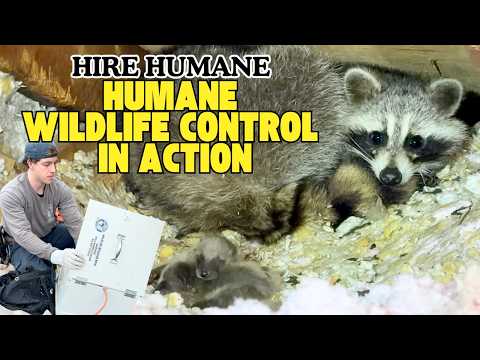 ▶ See our humane wildlife work
Compassion is not negotiable
Room for wildlife.
Space for you.
Pigeons are resourceful neighbours looking for shelter and somewhere to raise their young. Helping you enjoy your property again should go hand in hand with care for the birds.
We inspect roosting and nesting areas before recommending a plan. The presence of eggs or young matters, and we take the time to explain how that affects the work.
Our exclusion options include bird wire, coil and netting, selected for the structure and installed with care. The goal is to prevent access to problem areas without trapping birds behind the barrier.
Your pigeon resource
Answers, all in one place.
Get to know your feathered neighbours and the options for protecting your property.
Pigeon Facts
Pigeon Facts
Wherever there are people, there are pigeons. They are descended from rock doves, which were originally domesticated for food and pets. Released birds are the forebears of today’s pigeon infestations, which plague cities across the globe. And because they have no natural enemies, pigeons have become the number one avian pest by far. The following are some more pigeon facts for GTA homeowners:
Habitat
Everywhere people are found. Pigeons are especially numerous in urban areas and can be found in public parks as well as more industrialized, developed spaces. They nest in areas that protect them from the elements such as lofts, attics, and under architectural ornamentation.
Breeding
Pigeons are monogamous and will lay one to two eggs, which hatch in about 18 days. They reproduce year-round with the young leaving the nest after four to six weeks, during which time more eggs are laid.
Food And Feeding
They will eat just about anything!
Morphology And Lifestyle
- Length: 27 centimeters on average
- Weight: 370 grams on average
- Calls: Coos, moans and grunts
- Lifespan: 3, 4 years
Did You Know?
- Pigeon fact: Droppings cause vegetation to decay, leading to order problems.
- Pigeon fact: Pigeons are not migratory.
- Pigeon fact: One pigeon can deposit over 11 kilograms pounds of droppings per year.
- Pigeon fact: Pigeon nests can cause fires on electrical signs.
Pigeon Problems
Pigeons are the most common avian pest in the Greater Toronto Area and are the most serious bird pest for human habitation. If you have pigeons on your property, they should be dealt with quickly. Pigeons can cause expensive damage to a property in a short period. The following are some common pigeon problems:
Property Damage
Corrosive damage to buildings and property: Pigeon droppings are highly acidic and prolonged contact to siding, painted surfaces, vegetation, and landscaping can cause lasting damage.
Invasive nests: Pigeon nests are commonly located on ridges and balconies around your home or business. This can cause a lose of useful spaces and unsightly and toxic bird droppings
Fire hazards: Birds also like to build their nests in chimneys which can cause smoke to back-up into the living-spaces or worse can catch on fire.
Blocked gutters and drainage. Pigeon nests in gutters or downpipes can cause water backup, flooding, and other damage, while also leading to runoff of their droppings, further spreading the risk of health issues and damage to property.
Health And Safety Risks
Mites, ticks, fleas: Pigeon nests are often infested with mites, ticks and fleas which can be a nuisance for humans as well as pets.
Histoplasmosis: If bird feces are inhaled, it can result in hisoplasmosis which is an incurable disease characterised by constant flu-like symptoms.
Cryptococcosis, and psittacosis: Like histoplasmosis, these diseases can be dangerous or life-threatening to people with certain conditions, like asthma or weakened immune systems and can result from contact or inhalition of pigeon droppings.
Pigeons reproduce rapidly, generating a clutch of 1-3 chicks with an incubation period of just 18 days. If you have a pigeon problem on your property, it’s critical to act quickly. The longer you wait, the more likely your property is to face costly repairs or irreversible damage.
Pigeon FAQs
The Following Are Some Common Pigeon Questions That Our Customers Ask Us:
How do I prevent pigeons from nesting under the eaves of my house where one roof overhangs another?
Pigeons are very persistant birds and the only guaranteed way to exclude them from an area of your roof is with the use of firmly attached bird wire, bird coil, porcupine wire, netting and screening. Conact Us to schedule an appointment to find out how best to solve your pigeon problem.
Do plastic owls and other scare tactics deter pigeons?
No. Plastic owls, snakes, bird silhouttes and other items intended to scare pigeons away may work intially but once pigeons realize the deterring object does not move, they resume normal activity.
Where do pigeons live?
The common feral pigeon is a non-migratory bird that lives in one location all of its life and nests in sheltered areas like roof-tops, eaves, under air conditioning units and on structures with over-hanging roof lines. Unfortunately without proper control methods, once they decide to infest your home, they are probably there for life.
What do pigeons eat?
Pigeons will eat anything they can find but common things like berry trees or bushes, dog or cat food left out and even grass seed can attract them. Around commercial properties its usually trash left in open dumpsters or unsealed garbage bags that attract pigeons.
Do pigeons carry diseases?
Yes. Often referred to as the “flying rat”, pigeons carry over 60 different bacterial diseases, viruses and funguses transmittable to humans and pets. Bird nests and materials can also host parasites, like the common bird mite. Some of the diseases most commonly spread by pigeons include Salmonella, Meningitis, West Nile Virus, Ecoli, Avian Flu (H5N1), and Histoplasmosis.
Why are pigeons roosting on my house?
In the urban environment, your home, provides ideal accommodations for pigeons, mainly because of a plentiful food supply, made to order shelter and harborage, and a lack of natural enemies. Due to these ideal conditions, this species of pests can grow at alarming rates and cause incredible amounts of property damage and health hazards.
Are pigeon droppings toxic?
Yes. Pigeon droppings carry over 60 different diseases that can be very harmful to humans and pets. These diseases can be easily spread through either breathing microscopic spores or through direct contact. Consequently, the appropriate bio-hazard safety equipment is highly recommended if cleaning up any kind of pigeon droppings.