

If you’ve ever spoken with us during a raccoon removal, you’ve probably heard us mention Baylisascaris procyonis, more commonly known as raccoon roundworm. For many homeowners, it’s the first time they’ve ever heard the word.
Although human infections are extremely rare, Baylisascaris is one of the most important health concerns associated with raccoons because of the potentially serious consequences if someone accidentally becomes infected.
The good news is that with a basic understanding of how it spreads, the risk can be greatly reduced.
This guide brings together everything homeowners need to know in one place – from what Baylisascaris is, to how it spreads, where it can be found around your home, why the “10-second rule” doesn’t apply, and the simple precautions that help keep your family safe.
What is Baylisascaris procyonis?
Baylisascaris procyonis is a species of intestinal roundworm that naturally lives in the intestines of raccoons. Adult worms can grow up to 20 cm (8 inches) long inside an infected raccoon without causing the animal to appear sick. Because raccoons are the parasite’s natural host, they often carry it without showing any signs of illness. The worms live inside the intestines, where they reproduce and lay eggs that are passed into the environment through the raccoon’s feces.
Studies have shown that infection rates vary depending on the region and the age of the raccoons. In some areas of North America, more than 70% of raccoons have been found to carry Baylisascaris. Ontario has documented the parasite in wild raccoon populations, which is why Public Health Ontario and Gates Wildlife Control recommend taking precautions around raccoon feces.
An infected raccoon can shed millions of microscopic eggs every day.
However, there’s one important detail many people don’t know: Fresh raccoon feces are not immediately infectious. The eggs require approximately 2 to 4 weeks in the environment before they mature into their infectious stage.
Once they become infectious, the eggs are incredibly resilient. Unlike many bacteria and viruses, Baylisascaris eggs are protected by a thick shell and a sticky outer coating that allows them to cling to surfaces such as soil, wood, tools, decks, and shoes. They can survive through rain, snow, freezing temperatures, and hot summers, remaining infectious for months or even years under the right conditions. Most household disinfectants, including bleach, do not kill the eggs. Instead, they must be physically removed from surfaces using soap, water, and thorough cleaning. This is one reason wildlife professionals take raccoon latrines so seriously.
Professional Tip: We always recommend removing raccoon feces as soon as it’s discovered. Fresh droppings generally require 2–4 weeks before the eggs become infectious, so prompt cleanup greatly reduces the chance of contamination developing in the first place. During cleanup, avoid creating dust, wear disposable gloves, and use disposable tools whenever possible to prevent accidentally spreading contamination.
Why Is Baylisascaris Different From Other Parasites?
Most parasites have evolved to live inside one specific animal. For Baylisascaris, that animal is the raccoon. When another animal or a person accidentally swallows the microscopic eggs, the larvae hatch inside the intestines. But because humans are not the parasite’s intended host, the larvae don’t stay in the digestive system.
Instead, they migrate through the body. They can travel through organs such as the liver and lungs and, in rare cases, may reach the eyes or brain. It is this migration, not the worms themselves, that can cause damage.
Thankfully, this almost never happens. Despite millions of people living alongside raccoons every year, human infections remain extremely uncommon.
How Do People Become Infected?
This is probably the biggest misconception we hear. Simply touching raccoon feces does NOT cause Baylisascaris infection. To become infected, someone must accidentally swallow the microscopic eggs.
This usually happens when contaminated hands, food, toys, soil, or other objects are placed into the mouth. This is why young children are considered the highest-risk group.
Children naturally:
- Put their hands in their mouths
- Eat snacks while playing outside
- Pick up dropped food
- Play in dirt or sandboxes
- Touch surfaces and then touch their face
Adults are generally at much lower risk because they typically wash their hands more frequently and are less likely to place contaminated objects in their mouths.
Why the “10-Second Rule” Doesn’t Apply Around Raccoons
We’ve all heard the joke.
Drop a cookie on the deck…
Pick it up within 10 seconds…
It’s still good.
Normally, the biggest concern is a little dirt. But if raccoons have been living around your home, there’s another factor that most people never consider.
Imagine a raccoon living underneath your deck. During the night, it leaves the den. It walks through its own feces at or near a raccoon latrine before wandering across your property.
As it explores, it walks across:
- Deck boards
- Outdoor furniture
- Railings
- BBQ side shelves
- Children’s toys
- Play structures
- Patio stones
- Front steps
- Outdoor tables
If infectious eggs are present on the raccoon’s feet, they can potentially be transferred to surfaces the raccoon walks across.
Because Baylisascaris eggs are microscopic, you cannot see them. This is why wildlife professionals recommend avoiding eating food that has fallen onto areas where raccoons are known to frequent.
Raccoon Latrines: Why They Matter
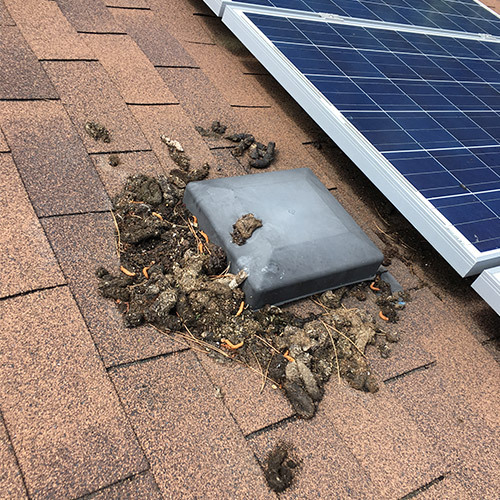
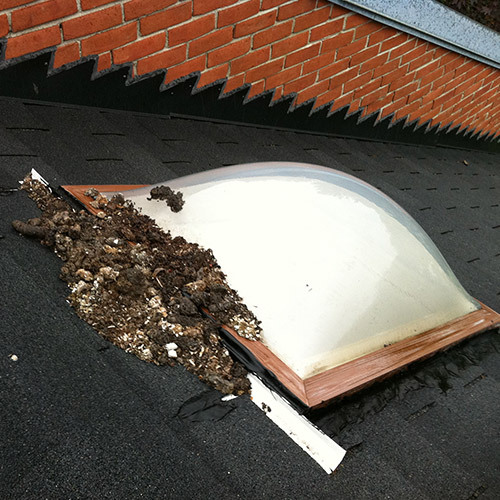
Raccoons don’t randomly use the bathroom. Instead, they often return to the same location over and over again. These areas are called latrines.
Common raccoon latrine locations include:
- Decks
- Roofs
- Window Wells
- Garages
- Sheds
- Attics
- Tree stumps
- Large rocks
- Wood piles
- Sandboxes
- Fence lines
- Chimneys
Over time eggs can accumulate around these areas if infected raccoons continue using the same site. Because the eggs can survive for years, these areas require proper cleanup.
Why Children Are at Greater Risk
Although anyone can become infected if they swallow the eggs, nearly all serious human cases have involved young children.
Why? Because children naturally:
- Crawl and play on the ground
- Put dirty hands into their mouths
- Forget to wash their hands before eating
- Explore the world by touching everything
- Frequently drop snacks while playing outside
Young children simply have more opportunities for accidental ingestion.
That doesn’t mean parents should panic.
It simply means good hygiene and avoiding known raccoon latrines are especially important.
If raccoons are living beneath your deck, under your shed, in your attic, or elsewhere on your property, it’s a good idea to have them humanely removed. A family of raccoons living on your property will naturally be coming and going every night, often following the same travel routes and using the same bathroom areas. The longer they remain, the more opportunities there are for environmental contamination.
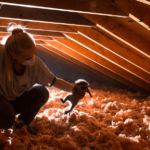
At Gates Wildlife Control, we specialize in humane removals. During baby season, we never separate a mother from her young. Instead, we safely reunite the family outside using our heated reunion boxes, allowing the mother to relocate her babies to a new den site naturally. Once the family has moved on, we permanently secure the entry point to help prevent future wildlife from moving in.
By humanely removing the family and preventing re-entry, you’re not only protecting your home from damage, you’re also reducing the likelihood that raccoons will continue using your property and creating new latrines in areas where your family spends time.
Have There Been Cases in Ontario?
Yes but they are very uncommon.
Public Health Ontario offers specialized laboratory testing because suspected human infections do occasionally occur.
One of Canada’s most well-known cases occurred in 2016, when a two-year-old boy in the Toronto area developed a severe Baylisascaris infection after unknowingly ingesting the parasite’s eggs. He required extensive medical treatment and rehabilitation, and his case helped raise awareness of raccoon roundworm across Canada.
Cases have also been reported elsewhere in North America, including recent infections in California involving young children.
The important takeaway is this:
Millions of Ontarians live alongside raccoons every day without becoming infected. Baylisascaris is something to respect, not fear.
How Can You Protect Your Family?
Fortunately, prevention is straightforward: Avoid direct contact with raccoon feces.
If you discover raccoon droppings on your property, avoid handling them unnecessarily. Remember that fresh feces may not yet be infectious, but they can become infectious after approximately 2–4 weeks if left in the environment, so prompt removal is important.
Use disposable gloves and disposable tools whenever possible.
If you’re cleaning up a small amount of raccoon feces, wear disposable gloves and, whenever practical, use tools that can be thrown away afterward, such as disposable scoops, cardboard, or plastic scrapers.
If you use a garden shovel, rake, or other reusable tool, it’s easy to forget that it came into contact with raccoon feces. Weeks or months later, you might use that same tool for gardening, landscaping, or around areas where children play without remembering it was previously contaminated.
For this reason, we recommend using disposable equipment whenever possible. If reusable tools must be used, they should be cleaned thoroughly and stored separately until they have been properly decontaminated.
Wash hands after outdoor activities.
Wash your hands thoroughly with soap and water after gardening, yard work, cleaning up wildlife feces, or after children have been playing outside.
Cover sandboxes.
Sandboxes are attractive places for raccoons to establish latrines.
Keeping them covered when not in use greatly reduces the risk of contamination.
Don’t leave pet food outside.
Outdoor food sources encourage raccoons to visit your property and increase the likelihood they’ll return regularly.
Discourage raccoons from living on your property.
If raccoons are living beneath your deck, inside your attic, or inside your shed, humane removal helps reduce future contamination and prevents new latrines from becoming established.
Clean raccoon latrines properly.
Household cleaners and bleach do not kill Baylisascaris eggs. Proper cleanup involves carefully removing feces while minimizing the creation of dust or debris that could spread contamination. Suitable outdoor surfaces can then be treated with high heat, which is one of the few effective methods for destroying the eggs. Because established raccoon latrines may contain large numbers of eggs, professional cleanup is often the safest option.
Common Myths About Raccoon Roundworm
Myth: “If I touch raccoon poop, I’ll get infected.”
False.
Touching raccoon feces alone does not cause infection. The microscopic eggs must be swallowed.
Myth: “Fresh raccoon poop is immediately dangerous.”
False.
The eggs generally require 2 to 4 weeks in the environment before becoming infectious. Fresh feces should still be removed promptly, before the eggs have time to mature.
Myth: “Bleach kills the eggs.”
False.
Baylisascaris eggs are extremely resistant to all household disinfectants, including bleach. Soap and water is the only way to wash the egg off a surface and high heat (flame) is one of the few reliable ways to destroy the eggs on appropriate surfaces.
Myth: “Rain washes everything away.”
False.
Rain may move contamination around, but it does not destroy the eggs. The eggs can remain viable outdoors for years.
Myth: “If raccoons walk across my deck, the whole thing is contaminated.”
Not necessarily.
While raccoons can potentially transfer microscopic eggs from a latrine to other surfaces on their feet, the greatest risk remains direct contamination around raccoon latrines themselves. Good hygiene, regular cleaning of outdoor surfaces, and preventing raccoons from living on your property significantly reduce the already low risk.
Myth: “I should be scared if I have raccoons nearby.”
No.
Raccoons are a normal part of Ontario’s wildlife. Human infections with Baylisascaris are exceptionally rare.
The goal isn’t to fear raccoons – it’s to understand the risks and take sensible precautions, just as you would with many other naturally occurring hazards.
The Bottom Line
Baylisascaris is one of the reasons Gates Wildlife Control technicians emphasize the importance of properly addressing raccoons living in and around homes. While the parasite can cause serious illness, it’s important to keep the risk in perspective: human infections are exceptionally rare, and simple preventive measures are highly effective.
Understanding how the parasite spreads is the key. It isn’t spread through casual contact with raccoons, and it isn’t airborne. Infection only occurs if the microscopic eggs are accidentally ingested.
By preventing raccoons from establishing dens and latrines on your property, practicing good hand hygiene, supervising young children outdoors, and ensuring raccoon feces are cleaned up safely, you can greatly reduce an already low risk.
At Gates Wildlife Control, we believe education is just as important as humane wildlife removal. Our goal is to help homeowners understand not only how we solve wildlife problems, but why certain precautions matter so families can safely coexist with the wildlife that shares our communities.